
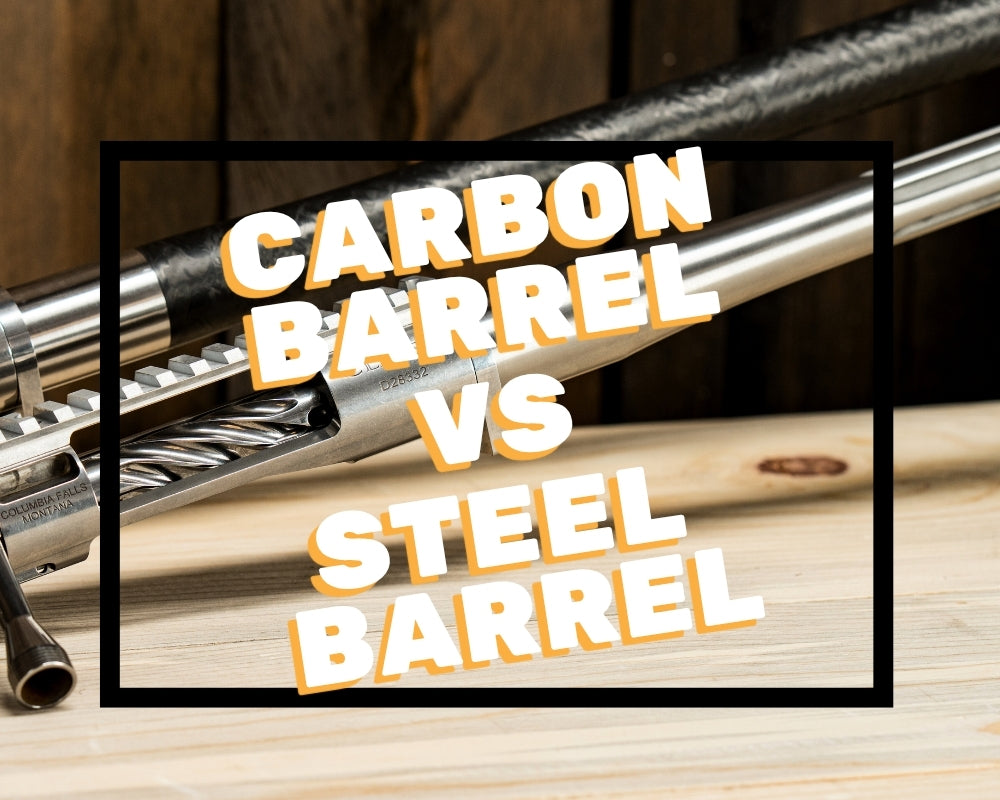
Carbon fiber-wrapped barrels and steel barrels are both excellent choices — but they're not interchangeable. The right pick comes down to how you shoot and what you're building for.
Weight
This is where carbon wins decisively. A carbon-wrapped barrel can weigh 30–50% less than an equivalent steel barrel. For a mountain hunter carrying a rifle all day, that matters. For a bench shooter or prone competitor, it's a non-factor.
Heat Management
Steel dissipates heat more evenly and predictably. Carbon barrels can trap heat at the steel core, causing point-of-impact shift during extended strings of fire. If you're running multiple shots quickly, steel is more forgiving. For hunters taking one or two shots per outing, it's a non-issue.
Accuracy
Both can be exceptionally accurate. The difference isn't material — it's quality of manufacture. A well-made Benchmark steel barrel will shoot just as well as a well-made Benchmark carbon barrel. At MOA, we use Benchmark exclusively for both.
Cost
Carbon adds cost. Expect to pay $250–$350 more for a carbon-wrapped barrel over a comparable steel barrel. For some builds, that's worth every dollar. For others, that money is better spent elsewhere.
Our Take
If weight is a priority — mountain hunting, long hikes, lightweight builds — go carbon. If you're running a precision rifle for competition or bench work, steel is the better value. We offer both through our custom build program and can help you decide which fits your build.



Leave a comment
This site is protected by hCaptcha and the hCaptcha Privacy Policy and Terms of Service apply.