
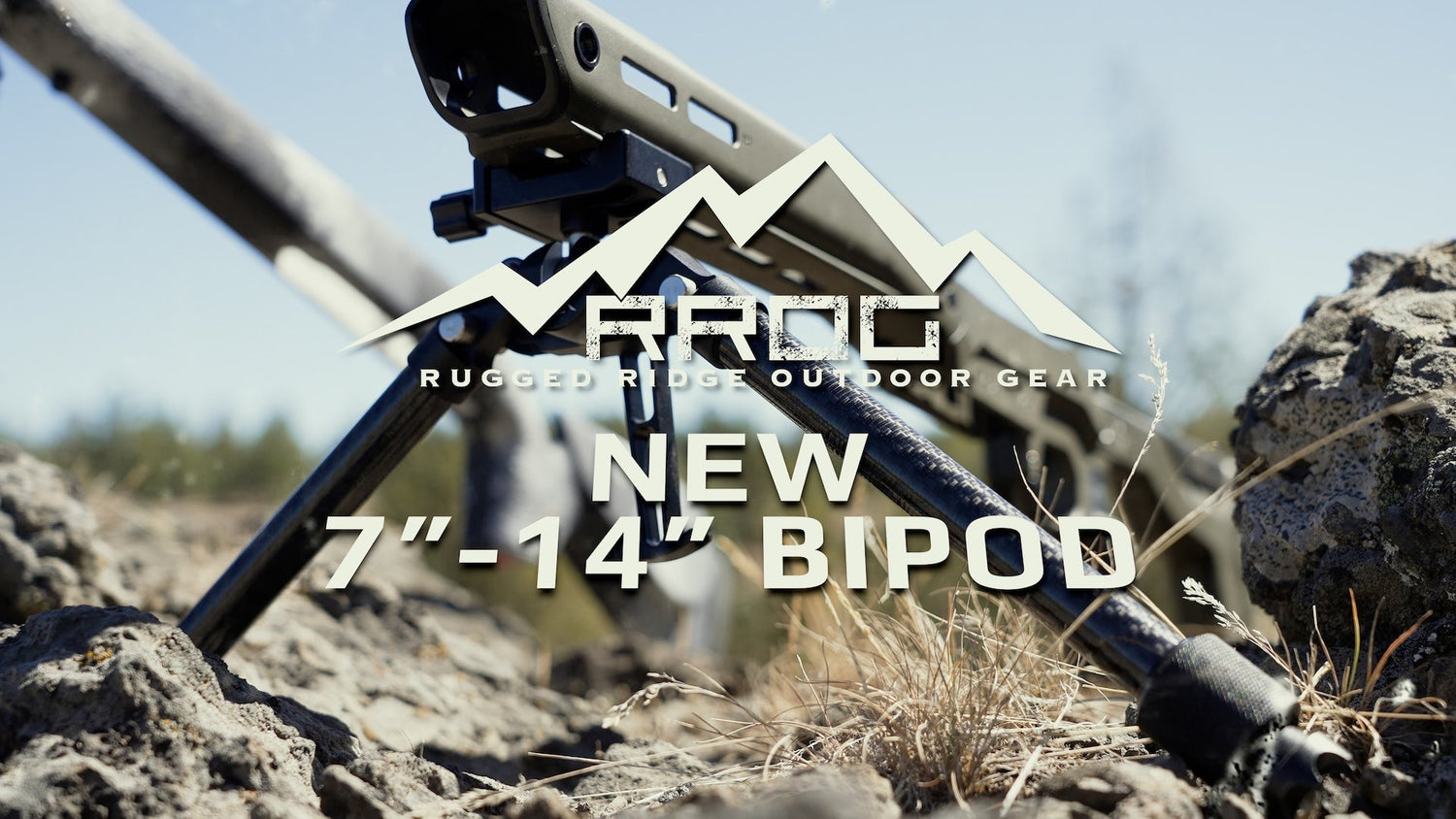
If a rear bag is the cheapest accuracy upgrade you can buy, a quality bipod is the most important upgrade you’ll make once. The bipod is the part of your rifle that touches the ground for every prone shot you ever take — and if it’s wobbly, light-flimsy, or won’t hold a cant, you’ll never know what your rifle is actually capable of.
The Rugged Ridge Gen 3 7-14” bipod is the front support we run on every long-range hunting rifle we build. Here’s a look at why.
What a Bipod Actually Has to Do
Pick up a $40 bipod and a $400 bipod side by side and the spec sheets look almost the same. Three things separate them in the field:
- Rigidity. When you load the bipod (push forward into it from the rifle), does it flex or does it stay where you put it? A flexing bipod jumps under recoil and rarely returns to battery in the same place.
- Cant and pan. Real-world prone shooting almost never happens on level ground. A bipod that locks out cant and pan but lets you adjust them when needed is a different tool than one that’s rigid in one axis only.
- Leg deployment. When the moment comes, you don’t have time to fight the legs. They have to deploy fast, lock positively, and adjust height without tools.
Why the Gen 3 7-14” Earns Its Spot
The Rugged Ridge Gen 3 hits the targets that matter for a hunting bipod:
- 7–14” height range. This is the Goldilocks range for prone shooting. 7” gets you low enough for true prone over a small rise; 14” clears tall grass and sage without forcing you into a sitting position.
- Lightweight build. Built with aircraft-grade materials and precision machining — stiff but not heavy. On a backcountry hunt, every ounce on the front of the rifle changes how you carry it.
- Cant and pan adjustment. You can lock it solid for benchwork or unlock it to track game across a draw. Most cheap bipods give you one or the other.
- Tool-free leg adjustment. Push the button, set the height, lock it. Done in seconds.
- Quick-detach mount. Comes off the rifle for transport, goes back on in the same place.
How We Run It
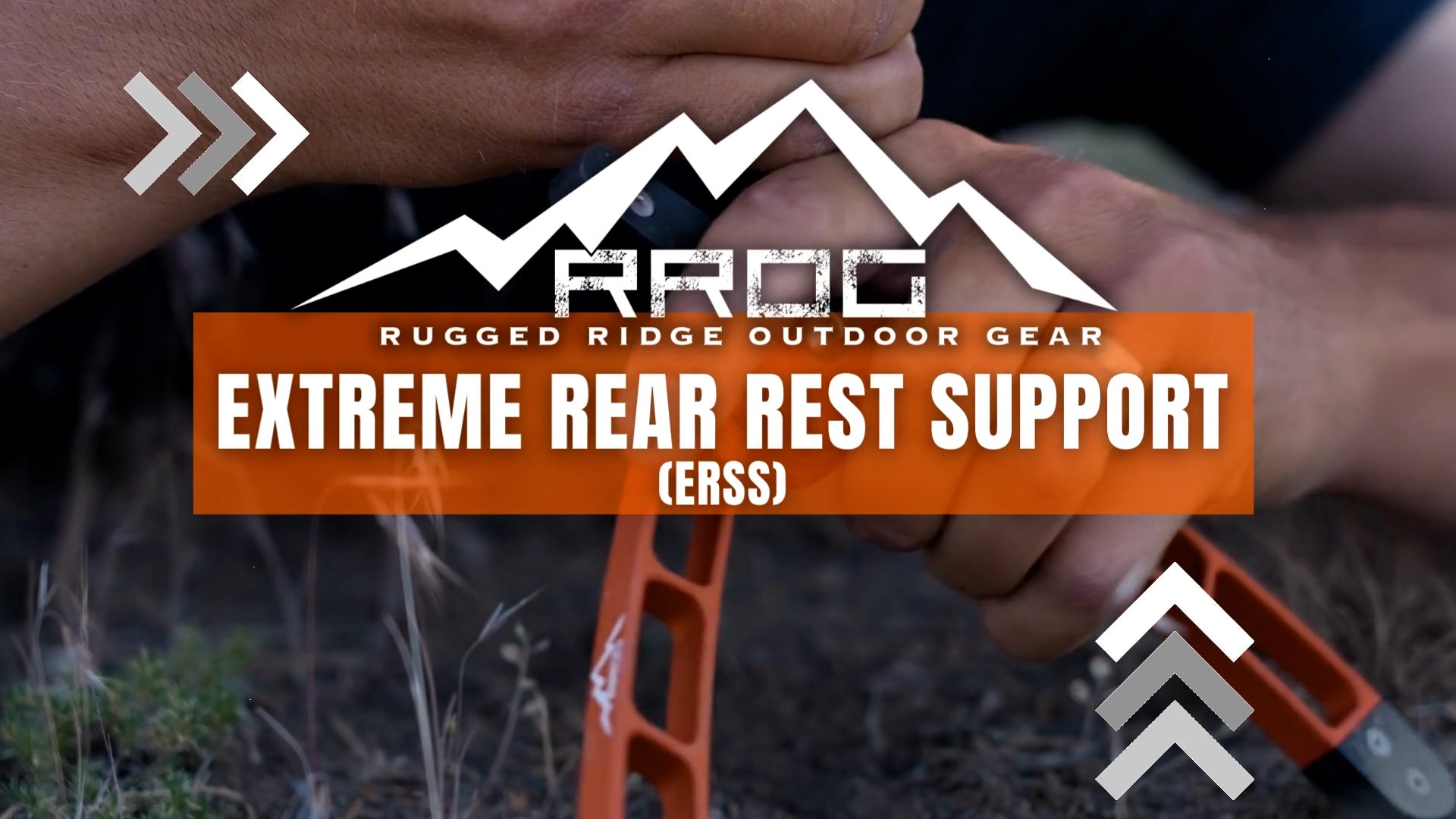
For most long-range hunting shots, the Gen 3 lives mounted on the rifle’s forend, legs folded back along the stock. When a shot sets up at distance, we deploy the legs, load the bipod (press the rifle forward into it until the legs flex slightly into the ground), and shoot off it with a Rugged Ridge Extreme Rear Support System under the toe of the stock. That combination — stiff bipod loaded forward, firm rear bag squeezed for elevation — is the prone setup we trust at 1,000 yards.
Who It’s For
- Long-range hunters shooting prone at variable distances over uneven country
- Backcountry hunters who can’t carry a chunky bench bipod
- PRS / NRL hunter competitors who need cant and pan dialed under time
- Anyone upgrading from a stamped-aluminum bipod and wondering why their rifle won’t shoot the way it used to
Where to Get One
The Rugged Ridge Gen 3 7-14” bipod is available at Extremestore.us. Pair it with the Extreme Rear Support System for a complete front-and-rear setup built to the same standard.
Watch the full video above to see the bipod in action. For setup questions on a specific rifle build, drop a comment on the Extreme Outer Limits channel — we read every one.
The bipod is the part of the rifle that touches the ground every time you shoot prone. Buy it once. Buy it right.

Leave a comment
This site is protected by hCaptcha and the hCaptcha Privacy Policy and Terms of Service apply.