
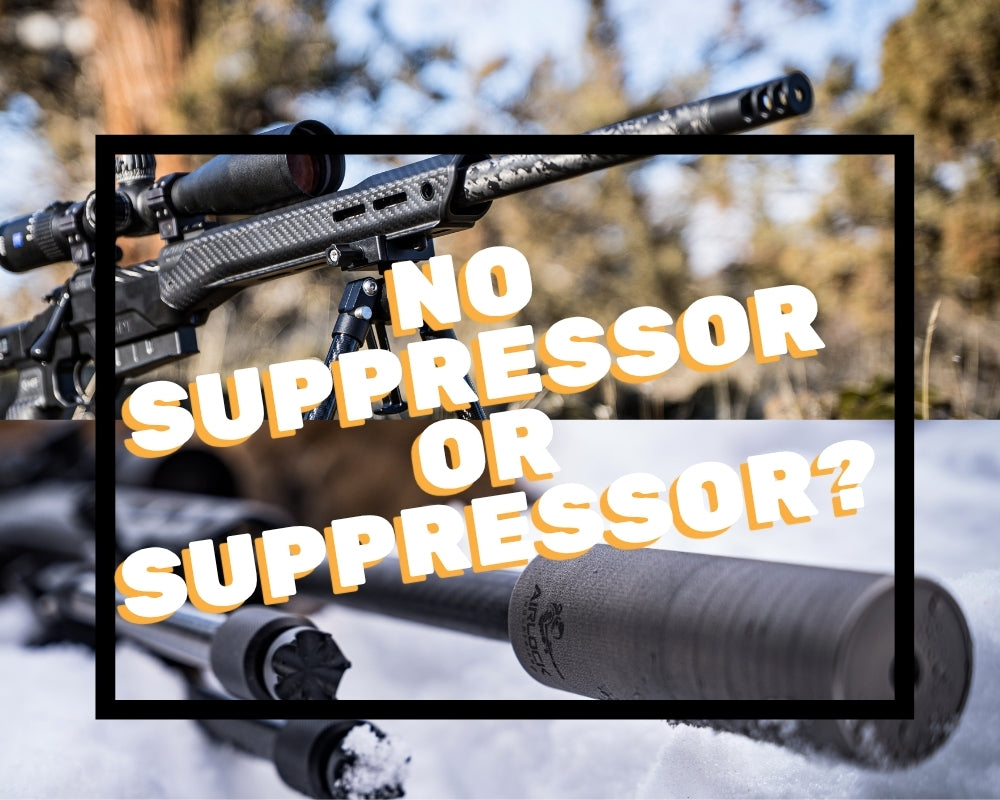
Both a suppressor and a muzzle brake bolt onto the end of your barrel — but they solve different problems. Knowing the difference helps you choose the right tool for your setup.
Muzzle Brake
A muzzle brake redirects propellant gases to counteract recoil and muzzle rise. A well-designed brake can reduce felt recoil by 40–60%, which keeps you on target for follow-up shots and makes extended shooting sessions more comfortable. They're affordable, low-maintenance, and effective. The tradeoff: they're loud — noticeably louder than a bare muzzle for anyone nearby.
Suppressor
A suppressor reduces the sound signature of the shot by slowing and cooling the escaping gases. It also reduces recoil — not as aggressively as a dedicated brake, but meaningfully. Suppressors make communication easier at the range, protect hearing, and reduce flinch over time. The tradeoffs are cost, added weight and length, and the NFA wait time and tax stamp.
Which Should You Run?
If hearing protection and sound reduction are priorities — especially for hunting where you might not have ear pro — a suppressor is worth the investment. If you're focused on recoil management and staying on target, a quality muzzle brake does that job more effectively for less money.
MOA makes our own muzzle brakes in stainless steel and titanium, and our rifles are threaded and ready for suppressor use. See our products or call us to talk through your setup.

Leave a comment
This site is protected by hCaptcha and the hCaptcha Privacy Policy and Terms of Service apply.