
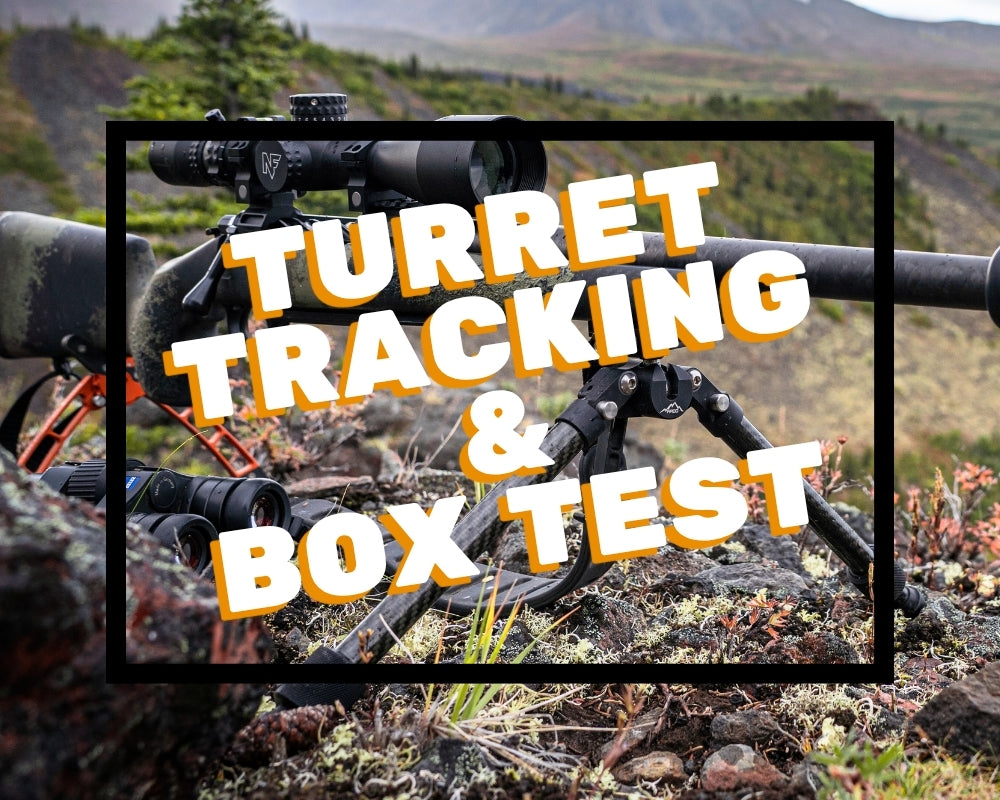
Your scope's turrets can look great on paper — but do they actually move the point of impact where they say they will? The box test is the simplest way to find out, and every precision shooter should know how to run it.
What Is the Box Test?
The box test verifies that your scope's elevation and windage adjustments are mechanically honest — that each click moves the reticle the correct distance, and that the scope returns to zero accurately after a series of adjustments.
How to Run It
- Zero your rifle at 100 yards.
- Dial up a known amount — say, 10 MOA of elevation. Shoot a group. It should impact exactly 10 MOA above your zero.
- Dial 10 MOA of right windage. Shoot again.
- Dial down 10 MOA. Shoot again.
- Dial left 10 MOA — back to your original zero. Shoot a final group.
If the scope tracks correctly, you'll have four groups forming a perfect square, and the final group will land on your original zero.
What to Look For
The groups should be evenly spaced and the final group should land where you started. If they're offset, your turrets aren't tracking accurately. If the final group doesn't return to zero, your scope has a return-to-zero problem — a serious issue for any rifle used at varying distances.
A scope that fails the box test isn't reliable for precision shooting. Don't trust dials you haven't verified. It's one of the first things we check on every MOA build before it leaves the shop.

Leave a comment
This site is protected by hCaptcha and the hCaptcha Privacy Policy and Terms of Service apply.